Mahmud Mir
The events following the 1970 elections gave student activists, such as freedom fighter Rokeya Kabir, a clear hint of conflict. They consequently began to mentally get ready for battle. They continued to obtain first aid training and educate people on what to do in a war situation during a blackout, in addition to participating in processions, meetings, and movements.
The East Pakistan Students Union, NAP, and the Communist Party jointly staged firearms training in the Dhaka University playground during the first week of March. Every day from 9 a.m. until 12 p.m., Rokeya would train there. She led the student brigade as its commander.
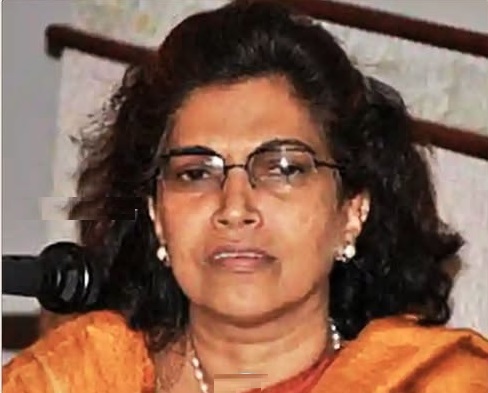
Rokeya Kabir, a freedom warrior, was born at Katli village in the Netrokona area on February 22, 1951. Syeda Badrunnesa was her mother, while Syed Mohammad Khan was her father. Since childhood, she had cultivated a combative mindset.
Rokeya Kabir did not enter the Liberation War out of the blue. Between the ages of 13 and 14, she participated in a number of movements. She participated in both the Students’ Union and Khelaghar. She also took part in the Netrokona education campaign in 1962 while she was a school student. From the start of her time in Eden Girls’ College in Dhaka, Rokeya actively participated in the East Pakistan Students’ Union.
She was elected the sports secretary of the college student union. Rokeya was also active in the 11-point movement of the students and the mass uprising of 1969.
On March 29, 1971, Rokeya left Dhaka for Kapasia by river. From there, she went to Agartala in the last week of April. As she was in the forefront of processions and meetings in Dhaka and Agartala, her pictures were often published in newspapers and magazines. As a result, everyone recognized her. For this reason, she was not allowed to go inside the country to fight. Therefore, Rokeya served as an organizer of the Liberation War from India.
Her family also actively participated in the Liberation War. Six of the nine siblings directly participated in the Liberation War. Along with Rokeya Kabir, her sister Monira, two elder brothers Golam Mortuza Khan and Lutfur Rahman Khan, and two younger brothers Naser Khan and Noman Ahmed Khan actively participated in the war.
In an interview, Rokeya Kabir highlighted various aspects of her active role in the Liberation War. She arranged for nurses to be recruited for hospitals in various camps in India, trained them, and sent them to treat injured freedom fighters, recruited freedom fighters, and after their political orientation, first for training and later for guerrilla warfare within the country.
Rokeya also arranged schools for children and adolescents in various camps. She found teachers from within the camps to teach them and collected books. She even taught mathematics and English herself.
In the interview, she also highlighted an incident from the difficult times during the Liberation War. Rokeya said that she had to eat vegetarian food day after day in the camp. One day, six kilograms of mutton were available for 300 people. Everyone was very happy. It was cooked with many pulses so that everyone could smell the meat. Everyone waited in line to eat that food.
An incident during the time of migrating to India from the motherland also deeply moved him. At that time, Rokeya was impressed by the way the common people, including farmers and workers, cooperated with each other for the sake of the motherland.
He said that on May 3, while crossing the border to India, he saw farmers working in the fields. They were used to seeing people leaving the country in groups. But after a while, a woman was seen in front of him, with a branch in her hand and vermilion on her head. She was also leaving the country like them. Then a farmer came and broke the conch shell of the woman’s hand and asked her to bring water and wash the vermilion. This was because if she appeared in front of the king or the chief of the army, she would not be recognized as a member of a special religion; otherwise, there was a risk of persecution.
After the country gained independence, Rokeya Kabir returned to Dhaka from Agartala on December 24. After returning home, she joined the organization again. Later, Rokeya Kabir worked to build society as the executive director of Bangladesh Nari Pragati Sangha-BNPS.
Starting from the student movement, preparing for the liberation war, armed training, and finally fulfilling the responsibilities of the liberation war organization from outside the country, Rokeya Kabir’s path is thus linked to the liberation struggle of Bangladesh.