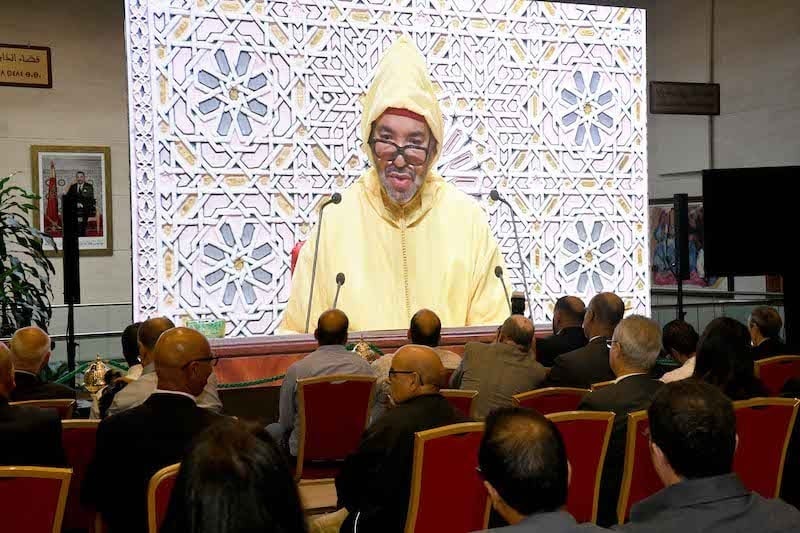
News Desk: King Mohammed VI of Morocco has called for the adoption of a new strategy regarding migration cooperation with Spain.
King Mohammed VI said that Morocco’s current migration-cooperation model has become outdated despite producing tangible results, calling for a new framework better adapted to recurring migration crises.
Addressing Parliament at the opening of Morocco’s new legislative term, the King said cooperation with Spain had advanced significantly, including on irregular migration, but remained contrained by legal provisions and court decisions disconnected from conditions on the ground.
King Mohammed VI said Friday that Morocco’s current migration-cooperation model has become outdated despite producing tangible results, calling for a new framework better adapted to recurring migration crises.
Addressing Parliament at the opening of Morocco’s new legislative term, the King said cooperation with Spain had advanced significantly, including on irregular migration, but remained contrained by legal provisions and court decisions disconnected from conditions on the ground.
He stated that the partnership with Spain is a sovereign decision for Morocco and cannot be influenced by pressure, threats, or blackmail. At the same time, he announced plans to propose a new strategic approach focused on joint development, enhanced economic competitiveness, and regional stability.
King Mohammed VI made these remarks on Friday (October 9) during his inaugural address for the first legislative year of the 12th Parliament. He was accompanied by Crown Prince Moulay El Hassan, Prince Moulay Rachid, and Prince Moulay Ahmed.
In his speech, the King noted that Morocco has solidified its position as a responsible and reliable partner on the international stage. The country honors its commitments and expects similar responsible conduct from its partners. However, the current framework for migration cooperation has become outdated, as evidenced by recurring crises.
He acknowledged progress in cooperation with Spain across various sectors, including the fight against illegal migration. Yet, he pointed out that certain outdated legal provisions and judicial rulings are hindering the repatriation of unaccompanied minors and fraudulent asylum seekers—situations that criminal networks exploit for gain. To address this, Morocco intends to present clear and pragmatic strategic proposals to its partners.
The King’s address emphasized not only diplomacy but also the country’s economic and social development. He called for increased investment in water, energy, and food security, as well as in industrialization, the digital economy, and artificial intelligence. He also stressed the importance of youth skills development, job creation, and boosting private sector investment and exports.
Criticizing delays in administrative decentralization, he stated that further procrastination in transferring necessary powers, personnel, and financial resources from the central government to the regions is unacceptable. He insisted on the need to identify local issues and ensure the implementation of realistic solutions.
King Mohammed VI’s vision for Morocco’s future hinges on a balanced approach to migration, economic growth, and regional cooperation, aiming to foster a sustainable and prosperous environment for all citizens.