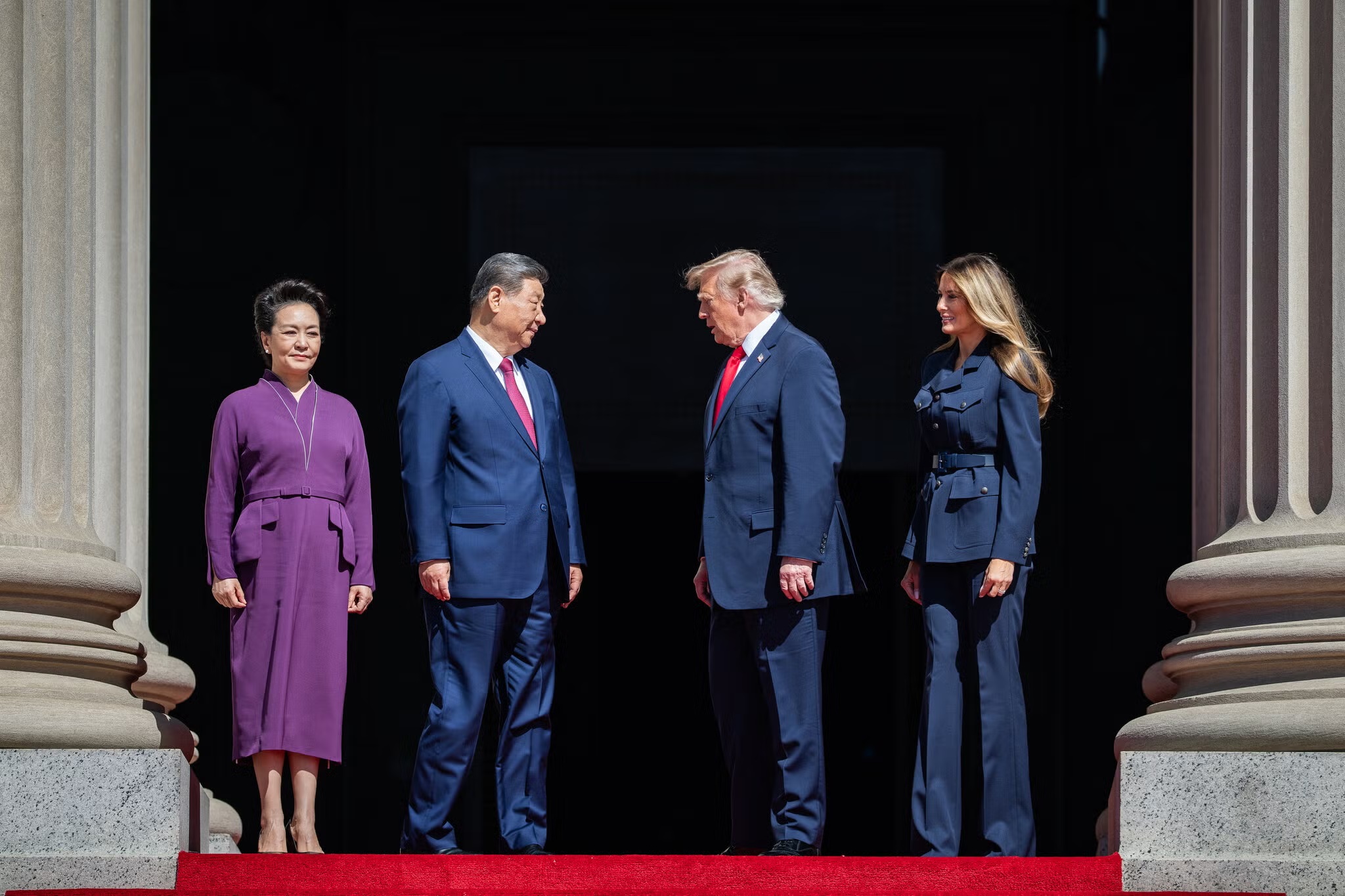
President Xi Jinping’s recent three-day visit to Washington, marked by grand ceremonies and personal diplomacy, concluded without significant policy breakthroughs on pressing issues such as trade, artificial intelligence, and the ongoing conflict in Iran.
During the visit, President Trump and First Lady Melania Trump hosted Xi and his wife, Peng Liyuan, for tea at the White House, followed by a visit to the National Archives to view foundational American documents. Despite the pageantry, the summit lacked concrete policy announcements, with Trump describing the meeting as beneficial for American farmers but providing no specifics.
The summit showcased the complexities of the US-China relationship, with both leaders emphasizing the need for continued dialogue. Trump noted that the two nations agreed to extend a trade truce by two months, allowing for further negotiations on a more comprehensive trade deal. US Trade Representative Jamieson Greer indicated that some key goods would be exempt from trade disputes, including agricultural products and medical devices.
While the visit included military flyovers and ceremonial events, major differences remained unresolved, particularly regarding Taiwan and China’s relationship with Iran. Trump reiterated to Xi that any support for Iran would be unacceptable, while Xi called for renewed negotiations to end the conflict.
The status of Taiwan emerged as a critical issue, with Xi urging Trump to publicly oppose Taiwan’s independence. Despite the lack of formal diplomatic relations, the US remains Taiwan’s most significant ally, bound by law to provide defense support.
As the summit concluded, experts expressed skepticism about the longevity of the positive atmosphere, predicting future tensions over technology, trade, and geopolitical issues. The leaders agreed to meet again later this year, with Trump characterizing the visit as productive and a step towards strengthening US-China relations.
In summary, while the visit was filled with ceremonial grandeur, it ultimately highlighted the ongoing complexities and challenges in the relationship between the two largest economies in the world.